
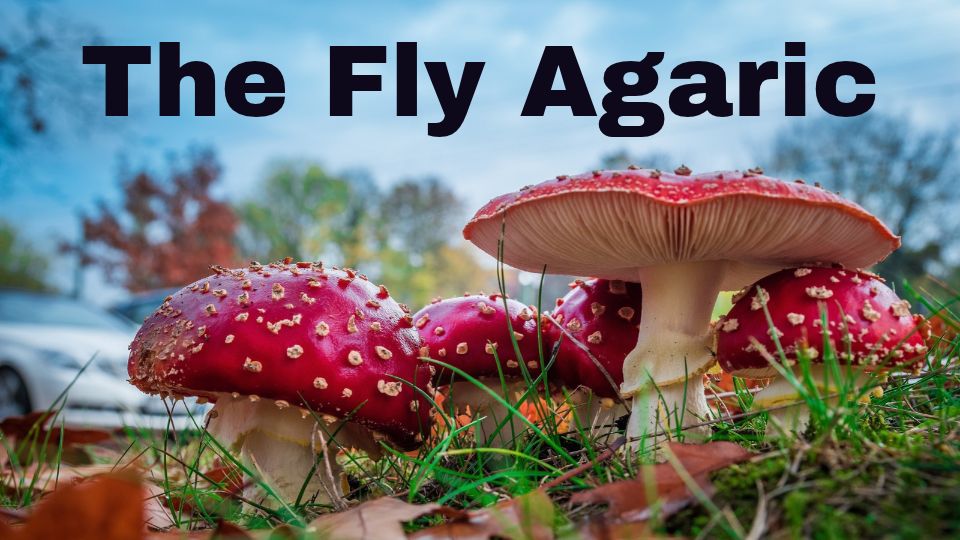
Fly Agaric — The Fairy-Tale Mushroom with a Dangerous Secret
Amanita muscaria
Imagine wandering through a moss-covered forest and spotting a brilliant red mushroom dotted with white, as if a woodland artist had painted it just for the fairies. Meet the fly agaric (Amanita muscaria), one of the most recognizable mushrooms on Earth. With its bold colors and storybook appearance, it has become a familiar symbol of enchanted forests and fantasy illustrations. Beneath that charming exterior lies a fascinating fungus with a complex relationship with trees and an important safety warning.
Species Range and Habitat
The fly agaric has a broad distribution across the Northern Hemisphere, including Europe, Asia, and North America. It is familiar in temperate and boreal forests, where it can appear beneath trees such as birches, pines, spruces, and other conifers. It forms ectomycorrhizal partnerships with living trees: the fungus helps the tree obtain water and mineral nutrients while receiving sugars produced through photosynthesis in return. Look for it in suitable habitats during late summer and autumn, especially after moist weather. The visible mushroom is only the spore-producing part of a much larger organism living in the soil.
Physical Features
The classic fly agaric has a vivid red or scarlet cap decorated with white or cream-colored warts. These are remnants of a protective covering around the developing mushroom, and rain can wash many away. As the mushroom matures, its cap expands from a rounded button into a dome and eventually flattens. The underside bears white gills. Its stem is generally white and sturdy, often bulbous at the base, with a skirt-like ring. Cap color can vary from red to orange, yellowish, or cream, so color alone is not enough for identification.
Fun Facts
- A mushroom with a famous face: its red cap and white spots have become a visual shorthand for magical forests in books, illustrations, and games.
- Its name hints at its history: the common name is associated with historical use in attempts to stupefy or kill flies; this is not a safe pest-control method.
- A tree’s underground partner: the visible cap is part of a larger fungal network that can persist when no mushrooms are above ground.
- Toxic, not a snack: it contains neuroactive compounds including ibotenic acid and muscimol, which can cause poisoning, confusion, delirium, and other serious symptoms.
Important note: Never eat or experiment with fly agaric. Admire and photograph it in place.
References and further reading
Vancouver Mycological Society — Amanita muscaria: https://vanmyco.org/about-mushrooms/poisonous/amanita-muscaria/
Learn More in my online course, Discover and Sketch Mushrooms
If you want to learn MUCH more about mushrooms, their characteristics, diversity and also how to draw them, check out my self-paced online course, Discover and Sketch Mushrooms.
Learn more about the Discover and Sketch Mushrooms online course HERE or buy the online course directly HERE

(14-day money-back guarantee)