
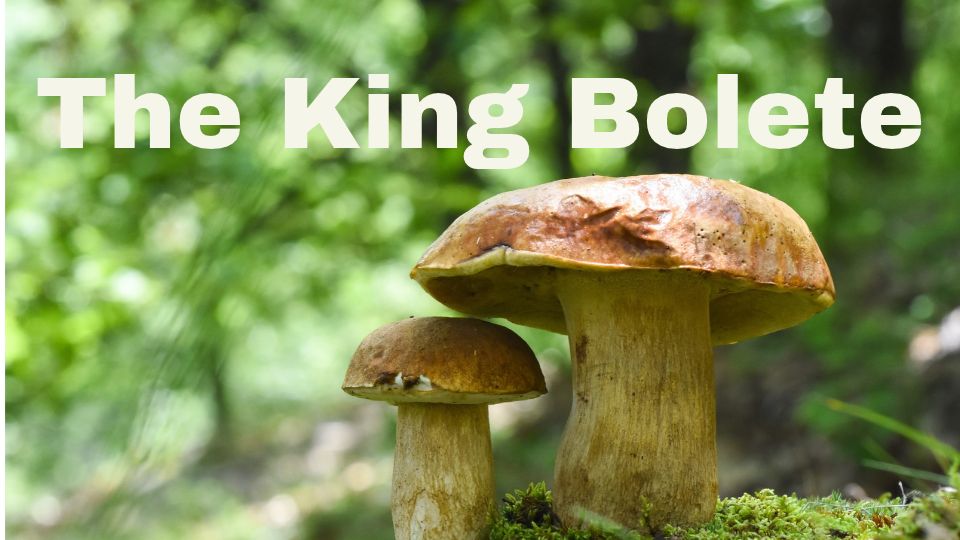
King Bolete — The Forest’s Gourmet Giant
Boletus edulis
Picture a plump, chestnut-brown mushroom emerging from a bed of pine needles, looking remarkably like a freshly baked bread roll. Meet the king bolete (Boletus edulis), also known as porcini, cep, or penny bun. Prized by chefs around the world, this mushroom offers nature lovers a glimpse into the partnerships that sustain forest ecosystems.
Species Range and Habitat
The king bolete occurs across temperate regions of the Northern Hemisphere, including North America and Europe. In the Pacific Northwest, it can be found in suitable conifer forests associated with trees such as spruce, hemlock, pine, and fir. It forms ectomycorrhizal relationships with living trees, exchanging nutrients and water for sugars. Fruiting varies with location, elevation, tree associations, and weather; autumn is an especially exciting season in many Pacific Northwest forests.
Physical Features
The king bolete has a sturdy, rounded cap ranging from pale tan to chestnut or reddish brown. Young caps are domed and gradually expand; in damp weather the surface may become slippery. Under the cap are pores rather than gills. The pore surface is usually white when young and becomes yellowish to olive-colored with age. Its thick stem is often bulbous, with a pale net-like pattern called reticulation near the top. The flesh is generally firm and white and does not typically turn blue when cut. These traits help with identification, but look-alikes mean a full assessment is necessary.
Fun Facts
- Royal reputation: the name king bolete reflects its size and esteem among mushroom enthusiasts.
- Global culinary celebrity: known as porcini in Italian and cèpe in French culinary traditions, it is celebrated for its earthy flavor; drying can intensify its savory aroma.
- The forest’s hidden collaborator: most of the organism is mycelium living in association with tree roots, not the cap visible above ground.
- Not all boletes are alike: some species are edible, some unpalatable, and some can cause illness. A brown cap and thick stem do not establish safety.
Important note: Never eat a wild mushroom based only on a photograph or brief description. Consult a qualified local identifier.
References and further reading
UBC Beaty Biodiversity Museum — Boletus edulis: https://explore.beatymuseum.ubc.ca/mushroomsup/B_edulis.html
U.S. Forest Service — Pacific Northwest forest fungi guide: https://www.fs.usda.gov/pnw/pubs/pnw_gtr513.pdf
Learn More in my online course, Discover and Sketch Mushrooms
If you want to learn MUCH more about mushrooms, their characteristics, diversity and also how to draw them, check out my self-paced online course, Discover and Sketch Mushrooms.
Learn more about the Discover and Sketch Mushrooms online course HERE or buy the online course directly HERE

(14-day money-back guarantee)