
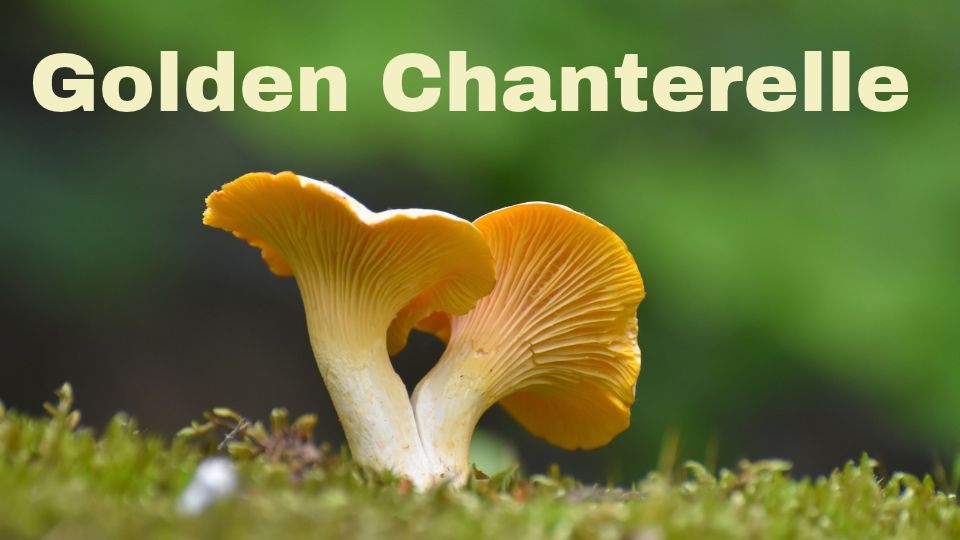
Pacific Golden Chanterelle — A Golden Treasure of the Rainy Forest
Cantharellus formosus
When autumn rains arrive in the Pacific Northwest, flashes of golden orange can appear among moss, fallen needles, and damp leaves. These may be Pacific golden chanterelles (Cantharellus formosus), celebrated mushrooms with a special place in the region’s natural and culinary heritage.
Species Range and Habitat
The Pacific golden chanterelle is native to the Pacific Northwest of North America, particularly Oregon, Washington, and British Columbia. It is associated with coniferous forests and trees such as Douglas-fir, western hemlock, and Sitka spruce. Like king boletes and fly agarics, it forms ectomycorrhizal relationships with living trees. Fruiting is especially associated with autumn, although local timing depends on moisture, elevation, and weather. The mushrooms emerge from the forest floor among moss, conifer needles, and leaf litter.
Physical Features
The cap is yellow-orange to golden, with an irregular, wavy margin. As it matures, it often develops a funnel-like shape. Underneath are thick, blunt, branching ridges that run down the stem; these are often called false gills and differ from the thin, blade-like true gills of many mushrooms. The stem is usually solid and tapers toward the base, while the flesh is pale or whitish. The aroma is often described as fruity, sometimes reminiscent of apricots, but smell alone cannot identify a mushroom.
Fun Facts
- Oregon’s official mushroom: the Pacific golden chanterelle became Oregon’s state mushroom in 1999.
- A case of mistaken identity: research helped distinguish Pacific golden chanterelle as a separate species from chanterelles once grouped broadly under Cantharellus cibarius.
- A partnership beneath your feet: the underground mycelium associates with living trees, even when no caps are visible.
- Golden, fragrant, and prized: its flavor and aroma make it popular in regional cuisine, so responsible harvesting and local rules matter.
- False gills, real fascination: the blunt, branching ridges beneath the cap are an important identification feature.
Important note: Other yellow or orange mushrooms can resemble chanterelles, including species that may cause illness. Do not rely on color, smell, or one feature to determine edibility.
References and further reading
Oregon Encyclopedia — Chanterelle Mushrooms: https://www.oregonencyclopedia.org/articles/mushroomschanterelles/
Oregon State University — Pacific Golden Chanterelles: https://blogs.oregonstate.edu/coastaltourism/chanetrelles-cantharellus-formosus/